
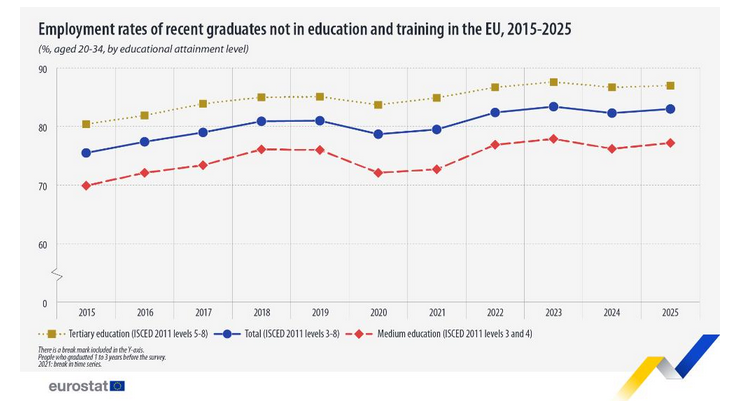
In 2025, the employment rate of young adults aged 20-34 who recently graduated from upper secondary or tertiary levels of education in the EU was 83.0%, up from 82.3% in 2024.
Statistics
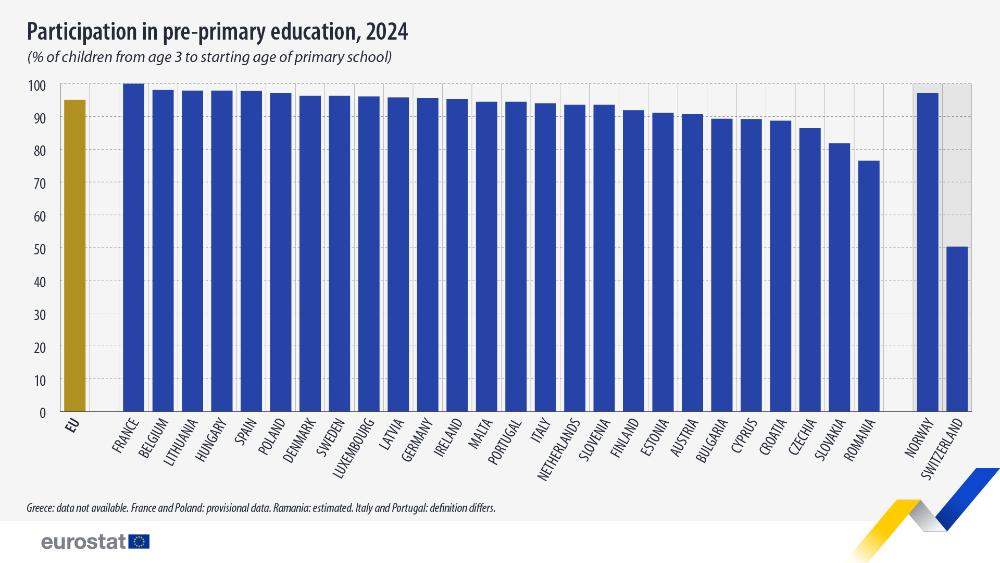
In 2024, 95.0% of children between the age of 3 and the compulsory starting age for primary education in EU countries were in pre-primary education, up from 91.2% in 2014.
Source:
Eurostat, 18 May 2026
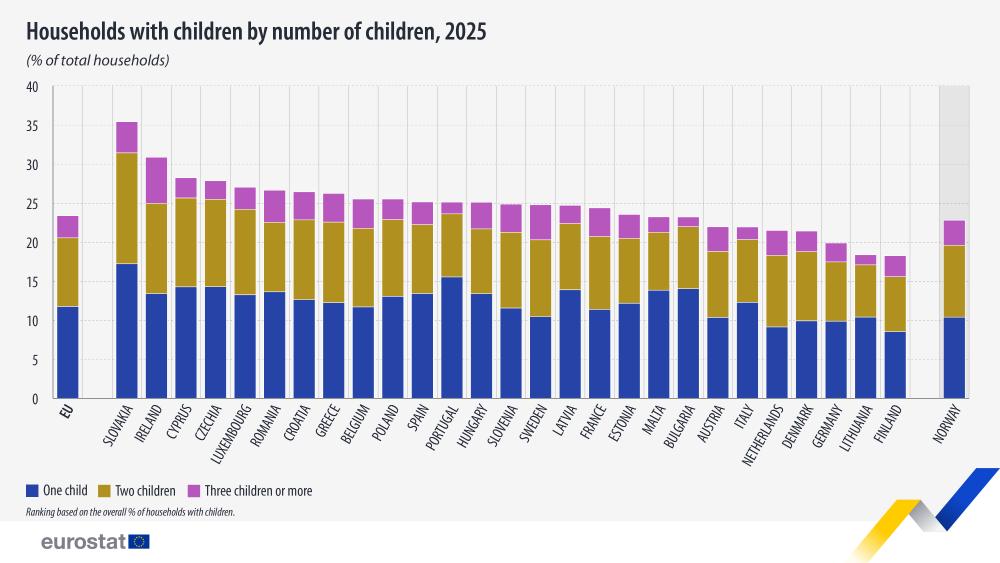
In 2025, out of 203.1 million households in the EU, only 47.4 million, or 23.4%, included children.
Source:
Eurostat, 13 May 2026
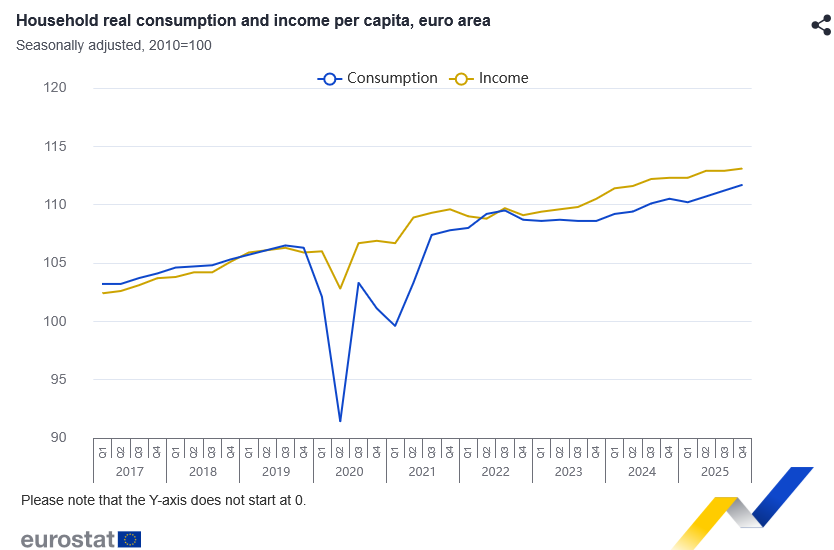
In the fourth quarter of 2025, household real consumption per capita increased by 0.5% in the euro area, after an increase of 0.4% in the previous quarter.
Source:
Eurostat, 28 April 2026
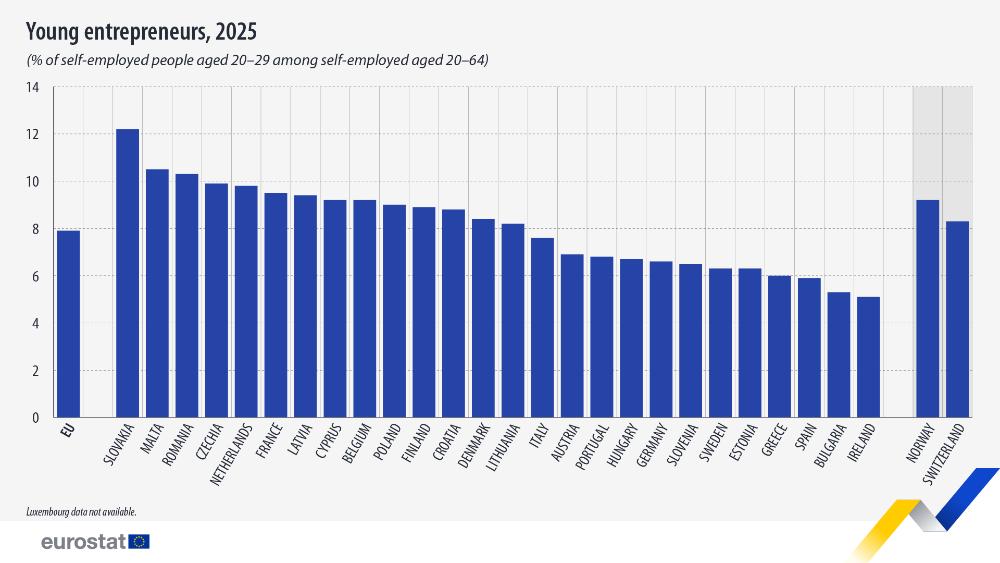
As technology reshapes workplaces at an unprecedented pace, some young people are finding their own ways to make a living, turning to self-employment out of creativity and innovation or necessity.<
Source:
Eurostat, 21 April 2026
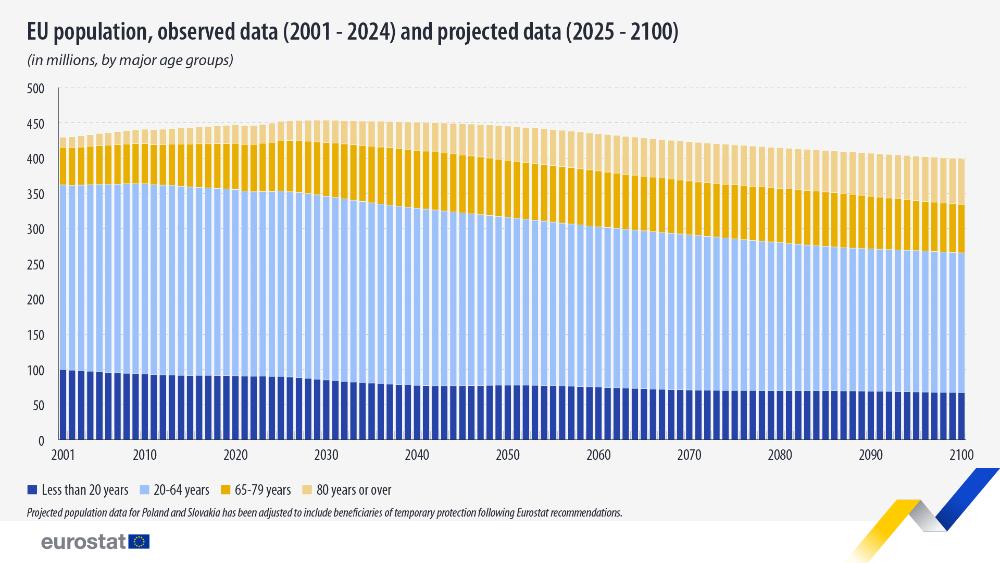
According to the latest population projections from Eurostat, the EU population is expected to decline by 11.7% between 2025 and 2100.
Source:
Eurostat, 16 April 2026
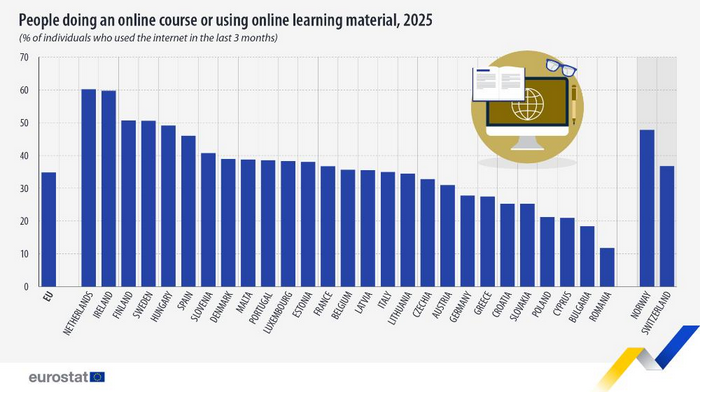
In 2025, 34.8% of EU internet users reported taking an online course or using online learning materials.
Source:
Eurostat, 19 March 2026
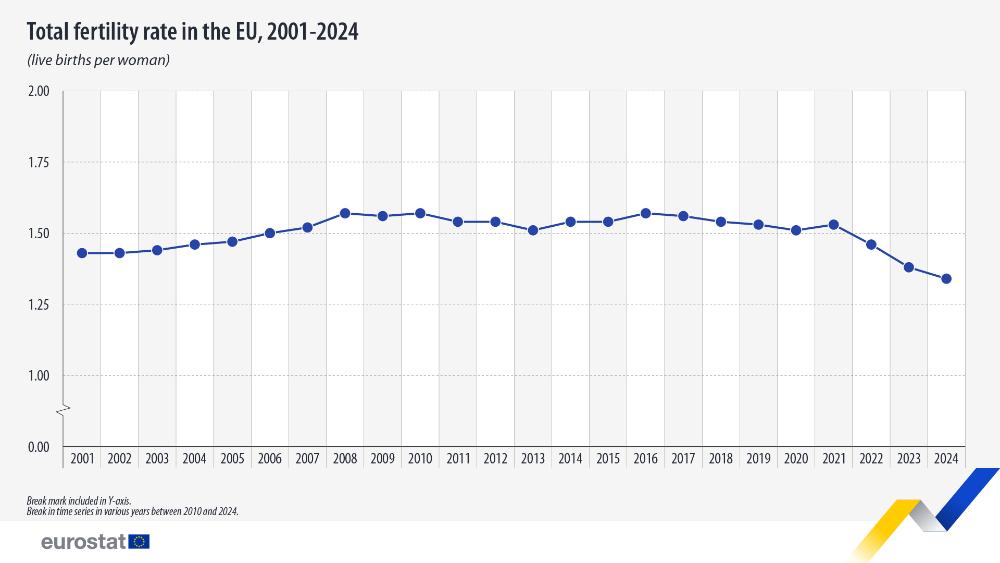
In 2024, 3.55 million babies were born in the EU, a 3.3% decrease from the 3.67 million in 2023. The total fertility rate for 2024 was 1.34 live births per woman in the EU, down from 1.38 in 2023.
Source:
Eurostat, 6 March 2026

2025 was another record-setting year for EU tourism, with nearly 3.1 billion nights spent in tourist accommodation establishments across the EU.
Source:
Eurostat, 4 March 2026

In 2024, 4.2 million people immigrated to the EU from non-EU countries. This figure does not include asylum seekers and/or refugees from Ukraine under temporary protection for some countries.
Source:
Eurostat, 27 February 2026